
Worship on the Fifth Sunday in Lent
10:00 am March 22, 2026
Minister: The Rev. Brad Childs Music Director: Binu Kapadia
Vocalist: Fionna McCrostie Reader: Maureen Cook
Welcoming Elder: Iris Routledge Children’s time: Vivian Houg
We gather to worship God
Music prelude
Greeting
L: The grace of our Lord Jesus Christ be with you.
P: and also with you.
Lighting of the Christ candle
Welcome and announcements
Preparation for worship
Call to worship:
L: God promised a new covenant through the prophet Jeremiah, who said that one day the law would be written on our hearts and all would know God.
P: Often, when we are confused and closed and worn, we wonder if that day will ever come.
L: God’s promise throughout the law and prophets is made alive in us. God will always be our God, and we will always be God’s people.
P: Let us be glad, for God remembers our sin no more
Opening praise: This I believe
Prayers of approach and confession
God — you in whom we live, breathe, and move —
We lift our hearts to you.
When life wears us down and worry crowds in, your word still speaks hope across the years.
As we follow Jesus this Lenten season, with his cross before us, we hold to the truth that you are never far from our pain.
You walk beside us, you cry with us, you steady us when we’re lost.
In this time of worship, restore our trust in your promise of new life.
Come close when we need you most. Hold us with a love that won’t let go.
We give you our wonder and our praise — Father, Son, and Spirit.
Merciful God,
We’re sorry. We’ve missed the mark in our thoughts, our words, and our actions.
We’ve done hurtful things and left undone the good we could have done.
We haven’t loved you with everything we are, and we’ve fallen short of loving our neighbours as ourselves.
Have mercy. Forgive us.
Change our hearts so we may delight in your ways and live for your glory. Amen.
Response: I waited, I waited on you, Lord
Assurance of God’s pardon
Jesus invites the weary and burdened to come to him for rest. Hear this promise: God’s peace and forgiveness are yours today, no matter what you carry. Breathe in the Spirit’s renewal and step into each new day lighter.
Musical Offering: Dayspring Singers
The Suffering Servant. Words adapted from Isiah 53:1-5 by Ruth Schram, music by Ruth as well. Copyright, MCMXCIII by Alfred Publishing Co. Inc.
We listen for the voice of God.
Song: Jesus loves me
Children’s Time
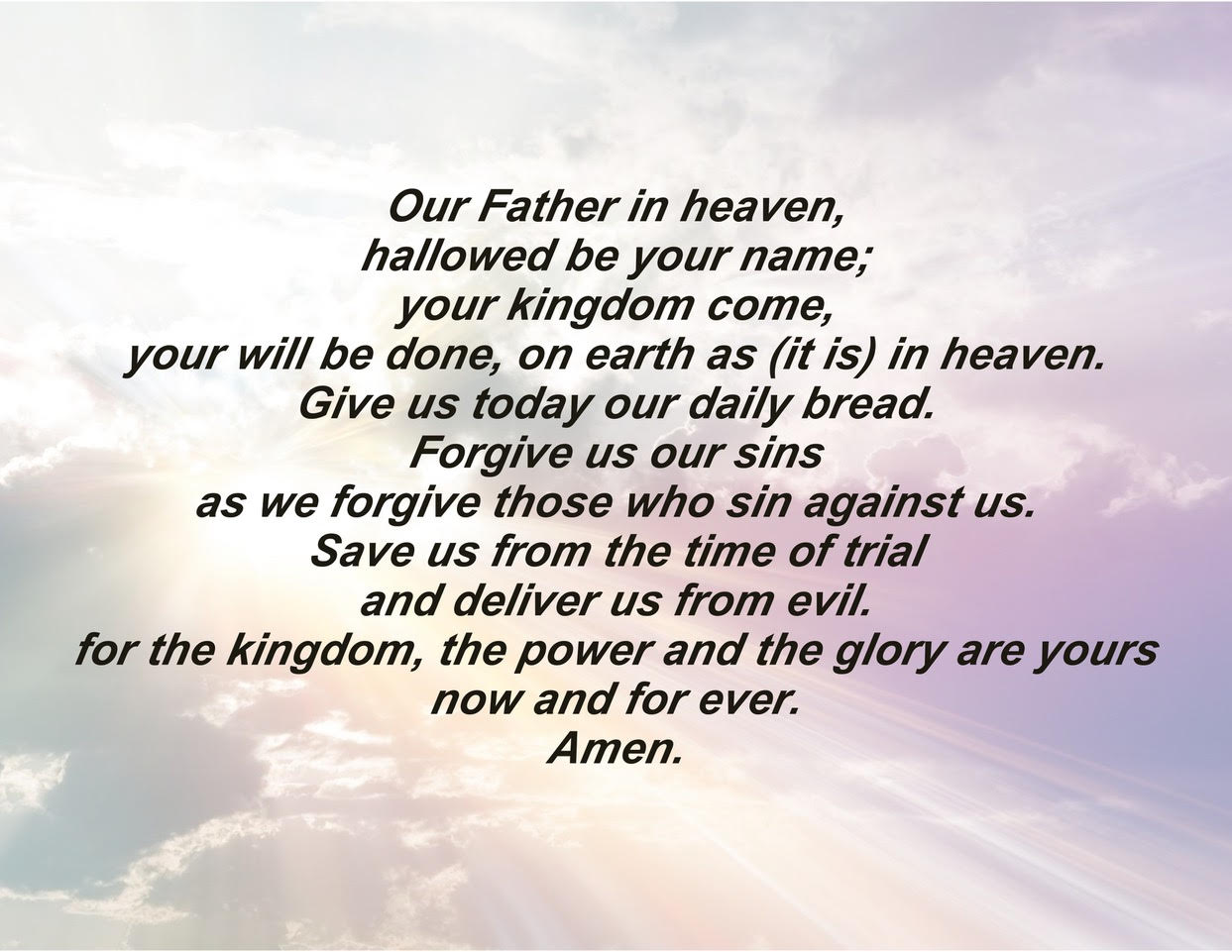
The Lord’s Prayer (535 )
Song: Oh for a thousand tongues to sing (374: vss 1,2,3,5 )
Scripture reading: John 11:1-45
Response: Jesus, remember me
Message: Raising Lazarus
Before going to see his friend, Jesus waits. Does God wait to answer our prayers? Sometimes God’s delays are delays; they are timed for glory. Yet in all things, He cries when we cry. Our God is not distant.
“Sometimes, God’s delays are not denials; they are divine setups for greater glory, deeper compassion, and resurrection life.”
The story opens with urgent news: Lazarus is sick. Mary and Martha send word to Jesus because they believe he can heal. His response? “This illness does not lead to death. It is for the glory of God, so that the Son of God may be glorified through it.” (v. 4)
Right at the start, verse 6 hits us like a brick: “Now Jesus loved Martha and her sister and Lazarus. So when he heard that Lazarus was sick, he stayed two more days…”
Wait – He loved him, so He didn’t go? That feels wrong. That feels almost cruel. The disciples felt it too. They had just escaped a stoning attempt in Judea only days earlier, John 10:31, the crowd was picking up rocks to kill Jesus for claiming to be one with the Father. They had barely made it across the Jordan to safety. Now the sisters send word: “Lord, the one you love is sick.” And Jesus… waits. Deliberately. On purpose.
We are uncomfortable with the delay. When we pray, we generally want things and want them fast. We assume the delay is neglect. But in the economy of God, delay can be the very space in which glory is revealed.
When Jesus arrives, it’s been four days. The delay has pushed the situation from the sickbed to the tomb. Martha meets him and says, “Lord, if you had been here, my brother would not have died.” Her words are full of grief and honest faith. Jesus responds with the astonishing claim: “I am the resurrection and the life. Whoever believes in me, though he die, yet shall he live” (v. 25–26). That claim reframes the situation. Death is not the end of the story for those who believe.
When God delays, he may be preparing a stage for greater revelation, not to shame us but to lift his glory higher so that many may see and believe.
“Robert Craig Knievel, better known as Evel Knievel, was born October 17, 1938. A wild child who holds the record for the most broken bones in a lifetime of crashes, he always believed in a ‘higher power’ but fought Jesus for 68 years. Gold, gambling, booze, women, he couldn’t let go. Yet God never let go of him.
Late in life, sitting on a Florida beach, he heard a voice inside: ‘Robert, I’ve saved you more times than you’ll ever know. Now come to me through my Son, Jesus.’ Stunned, the non-religious daredevil called his friend Frank Gifford, who urged him to read The Case for Christ by Lee Strobel. By April 2007, on Palm Sunday, Evel stood before thousands in a large cathedral, shared his story, and, for the first time, declared, ‘I believe in Jesus Christ!’ His raw passion moved the crowd: hundreds, estimates say 500 to 800, came forward that day wishing to give their lives to Christ and be baptized.
Six months later, the stuntman died. But not before ordering his tombstone. It reads simply: ‘Believe in Jesus Christ.’
His only regret? Evel said, “That I didn’t come to Christ sooner.” Yet I wonder: Wasn’t the long delay part of the glory? A life once defined by crashes became a final, explosive testimony that launched hundreds toward eternity. God’s timing turned a daredevil’s grave into a pulpit.” “Sometimes, God’s delays are not denials; they are divine setups for greater glory, deeper compassion, and resurrection life.”
Notice next how Jesus responds to Mary and the mourning crowd. Mary falls at his feet and repeats the painful truth: “Lord, if you had been here, my brother would not have died.” Jesus sees her weeping; he sees those around her weeping, and he is deeply moved. Verse 35 says simply, “Jesus wept.” “Two words. The shortest verse in the Bible. Yet perhaps the deepest. The eternal Son, through whom all things were made, stands at a grave and weeps. Not polite tears. Gut-wrenching sobs, the Greek word implies loud, anguished crying. The God who holds the universe feels the full weight of human loss. He doesn’t stand aloof. He enters the mess. He weeps with those who weep.
Imagine… the Creator crying over a friend’s death. If Jesus weeps at Lazarus’s tomb, how much more does he weep with you in your hospital room, your empty chair at the table, your unanswered prayers? Your pain moves him. Your tears touch his heart. He is not embarrassed by your grief. He shares it.”
What does this teach us? First, grief is not a failure of faith. Martha and Mary are believers; their tears do not contradict their faith. Jesus does not rebuke their sorrow. Instead, he enters it. He stands in the gap of human pain. He feels the ache of loss. He is not a distant God who lectures from afar; he is Emmanuel, God with us in our darkest hours.
Bring your pain to Jesus. Cry with him. Trust that his compassion is as real as his power.
The scene climaxes at the tomb. Jesus commands the stone to be taken away. Martha pushes back: the body has been in the tomb for four days; there will be a stench. Her objection is reasonable. Yet Jesus says, “Did I not tell you that if you believed you would see the glory of God?” The stone is rolled away, an act of faith as much as obedience, and then Jesus prays aloud, not for his own sake, but “so that the people standing around may believe” (v. 42).
Here are several things to notice. Jesus prays to the Father before acting; his power is not isolated from a relationship with the Father. He speaks with authority: “Lazarus, come out.” And the dead man obeys. The tomb becomes the stage for God’s voice, bringing life. What was irreversible in human terms becomes reversible in the hands of the Lord.
When Jesus commands us, it may require us to move heavy stones and take the risks of obedience, even when circumstances look hopeless. Our obedience positions us to witness God’s glory.
Martha’s confession is one of the great testimonies of the Gospels: “I believe that you are the Christ, the Son of God, who is coming into the world” (v. 27). She believes in the Messiah, even amid sorrow. Jesus’ claim to be the resurrection and the life reframes faith not as wishful thinking but as trust in a person, in Jesus himself. The promise is not merely resuscitation to the old life but entrance into life that death cannot account for.
The raising of Lazarus becomes a sign pointing to the ultimate defeat of death in Jesus’ own resurrection. Later, Jesus says that because of what happened here, many would believe. Faith that trusts Jesus as life itself sees beyond present losses into the final victory to come.
Anchor your hope in Jesus himself, not in circumstances. His life is the source of our strength; even in death, he is faithful.
The crowd responds in two ways. Some see and believe. Others, the religious leaders, are compelled toward fear and conspiracy, plotting against Jesus because the sign threatened their power and exposed their unbelief. Signs divide. The glory of God will attract hearts ready to trust and will alarm those invested in maintaining the status quo.
Genuine encounters with Jesus will sometimes win people and sometimes provoke resistance. Our role is to be faithful witnesses, not to control the outcome. Think of Abraham waiting 25 years for a promised son.
Or how about this: Vincent van Gogh painted with a fevered conviction that the world he saw needed his colours, filling canvases that pulsed with life. He lived in poverty, sold perhaps one painting during his lifetime, and died in 1890 believing he had failed. Decades later, the very canvases dismissed were hung in museums around the world. Van Gogh never stood in a crowded gallery while others applauded his influence; yet he kept working, trusting his call even when the applause never came. That doesn’t make Starry Night or Sunflowers any less powerful. In fact, it sort of makes them more powerful. “Even in our delays and tears, God is setting us up for glory.”
Where are you today? Are you standing in a place of delay, wondering why God has not yet come? Are you grieving a loss that feels final? Are you tempted to believe that your situation marks the end of hope?
Hear Jesus’ words again: “I am the resurrection and the life. Whoever believes in me, though he die, yet shall he live” (v. 25). And hear his presence: “Jesus wept” (v. 35). He is not an indifferent deity. He is the compassionate Lord who will command life where there is death.
Two courageous steps this week:
- Bring your honest ‘if only…’ to Jesus. Name the delay, the loss, the hurt—out loud in prayer. Say, ‘Lord, if you had been here…’ Then sit in silence and let him weep with you. Let his compassion meet your ache.
- Roll away one stone of resistance. Identify the hopeless place: a bitter grudge, a fearful diagnosis, a broken relationship, a habit you can’t break. Take one obedient step toward Jesus’ command: forgive that person (even if they don’t deserve it), schedule the doctor’s visit, pray over it. Reach out with that hard conversation. Obedience doesn’t erase the smell of death; it invites the voice of life.”
Remember: God’s delays are not denials. They are divine setups for greater glory. The tomb that looked final became the stage for resurrection. Your delay, your grief, your impossible situation, Jesus is setting the stage there, too.
So hear him call your name today: ‘[Brad], come out. Come out of despair. Come out of fear. Come out to life.’
May the God who weeps with us, delays for glory, and raises the dead fill you with unshakable hope, bold obedience in the waiting, and resurrection life in every dead place. Amen.
Song: Breathe on me, breath of God (389)
We respond to serve God
Our time of giving

We place these gifts in your hands, God. By your Spirit, turn them into seeds of new life—growing hope and comfort for tired souls, in Jesus’ name.
God of tender love, thank you that in Christ you call each of us by name and gather us into your family. Give us the love to make a real difference and the courage to follow you even when the road is hard.
Christ of mercy and grace, pour your compassion into this world again.
God of peace and promise, you call us to love our enemies and to be makers of peace.
Today we pray for places and people torn apart by long-standing hurt and fresh conflict — especially for those in the headlines and those we remember now…
Christ of mercy and grace, pour your compassion into this world again.
God, who knows suffering, thank you that Jesus took up the cross and understands our pain. We bring before you all who need healing and comfort today, whatever the cause of their pain…
Christ of mercy and grace, pour your compassion into this world again.
God of the broken-hearted, you know what it is to lose and to grieve. We lift up those mourning loved ones, and those who feel alone or let down by friends and family…
Christ of mercy and grace, pour your compassion into this world again.
God of hope and new beginnings, through Christ, you opened a future full of your redeeming love. Give us courage and confidence in your presence and power.
Song: May the God of hope go with us every day (726)
Sending out with God’s blessing
As we move toward Holy Week and the cross, remember Jesus’ promise: “I am the resurrection and the life. Whoever believes in me will live, even after death.” May Jesus’ tears wash over your sorrows, the Spirit live in your heart, and God’s promise of new life lead you each day. Amen.
Response: Sing Amen
Music postlude
————————————————————————-
Numbers in brackets after a song/hymn indicate that it is from the 1997 Book of Praise of the Presbyterian Church in Canada. Those and other songs are being used in accordance with the specifications of Dayspring’s licensing with One License (3095377) and CLC (A735555).
The Rev. Brad Childs retains the copyright (© 2026) on all original material in this service. As far as Brad Childs is aware, all of the material that has not been attributed to others is his own creation or is in the public domain. Unacknowledged use of copyrighted material is unintentional and will be corrected immediately upon notification being received.
Video recordings of the Sunday Worship messages can be found here on our YouTube Channel.